
FusionDock Max 2
Video Ports IssuesTroubleshooting Guide
Navigate display issues with your FusionDock Max 2 using our comprehensive guide. Discover easy-to-follow solutions for common problems like no video output, screen flickering, and connectivity challenges, specifically tailored for Apple silicon MacBooks.
Last updated: Sep 2025
1. No video output
1. Check accessories and connections
Step 1: Make sure the video cable (HDMI or USB-C) is securely connected to the monitor.
Step 2: If you are using a conversion cable with the iVANKY docking station, please use an iVANKY cable to avoid compatibility issues, and connect it to port 19 for proper operation. Note: Port 14 (HDMI) does not support HDMI-to-DP cables.
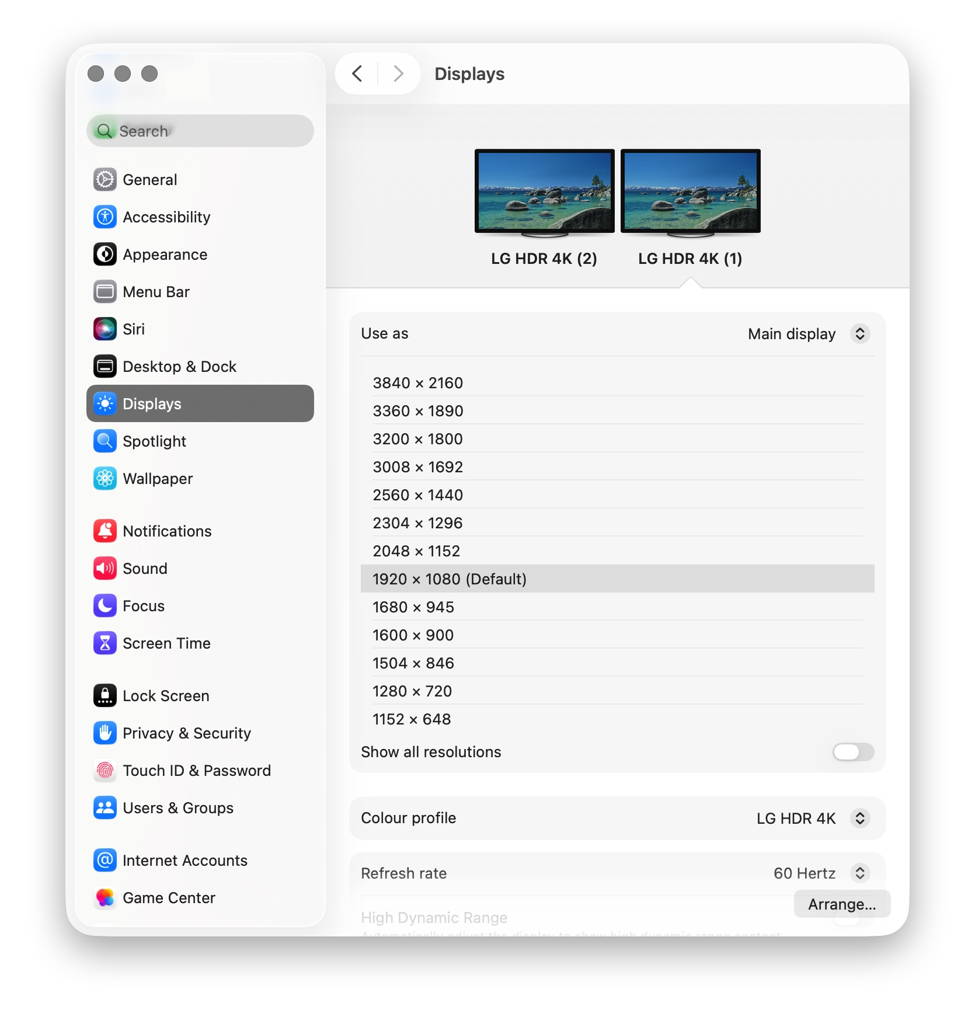
Step 3: Go to the Apple menu (upper-left corner) > System Settings (or System Preferences) > Displays, and choose the resolution recommended by your computer.

Step 4: Unplug the dock’s USB-C host cable from your computer, flip the connector, and reconnect it.
Step 5: Try connecting to another Thunderbolt port on your Mac. Thunderbolt 3 Mac models not compatible with Thunderbolt 5, please use a different laptop.
Step 6: Go to the Apple menu (upper-left corner) > System Settings (or System Preferences) > Displays. If the external monitor is detected but shows no image, replace the HDMI cable. If the issue persists, please contact iVANKY customer support.
2. Monitor detection
Step 1: Disconnect the monitor from the docking station, then reconnect it. Turning off the monitor first may help.
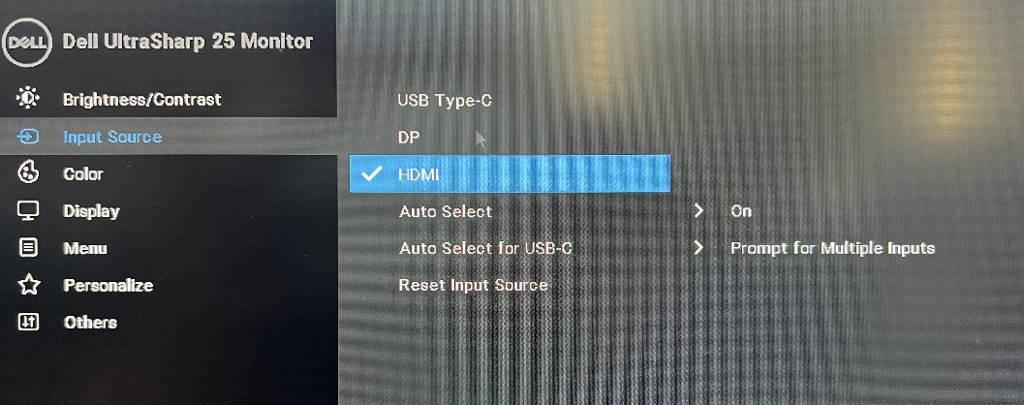
Step 2: Manually select the correct input on the monitor, such as HDMI.
Step 3: Restart your Mac. For MacBook, close the lid for a few seconds, then reopen it.
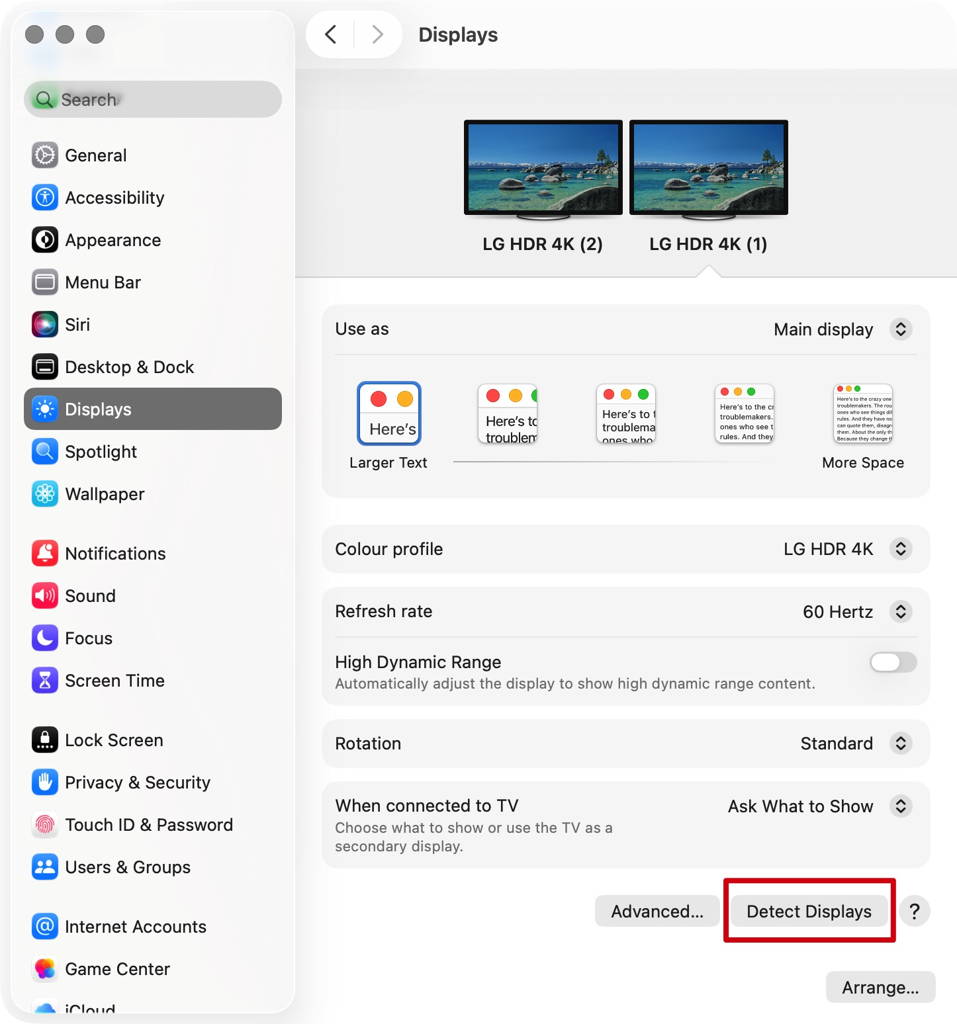
Step 4: Go to the Apple menu (upper-left corner) > System Settings (or System Preferences) > Displays. Hold down the "Option" key to reveal the "Detect Displays" button, then click it repeatedly (more than 10 times).
3. Allow docking station connection
Step 1: Go to the Apple menu (upper-left corner) > System Settings (or System Preferences) > Privacy & Security.
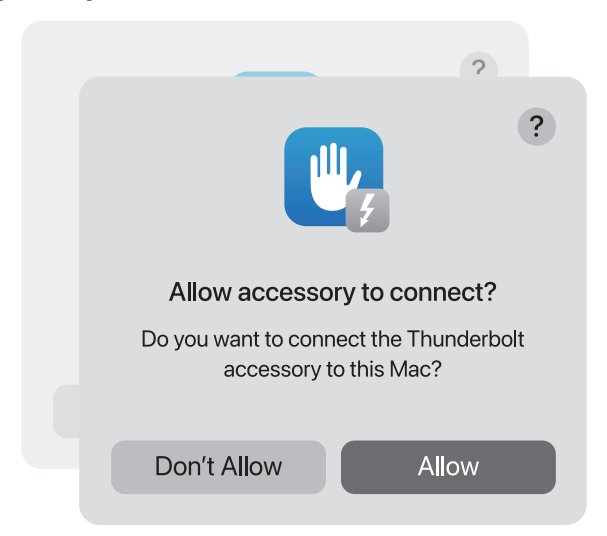
Step 2: Scroll down and click the pop-up menu next to “Allow accessories to connect”, then choose the option you need.
4. Check monitor brightness
Step 1: If the external monitor is black, please make sure the brightness is not set to the lowest.
Step 2: If you are using an Apple keyboard and monitor, adjust the brightness with the brightness keys on your keyboard, or go to System Settings > Displays to adjust it.
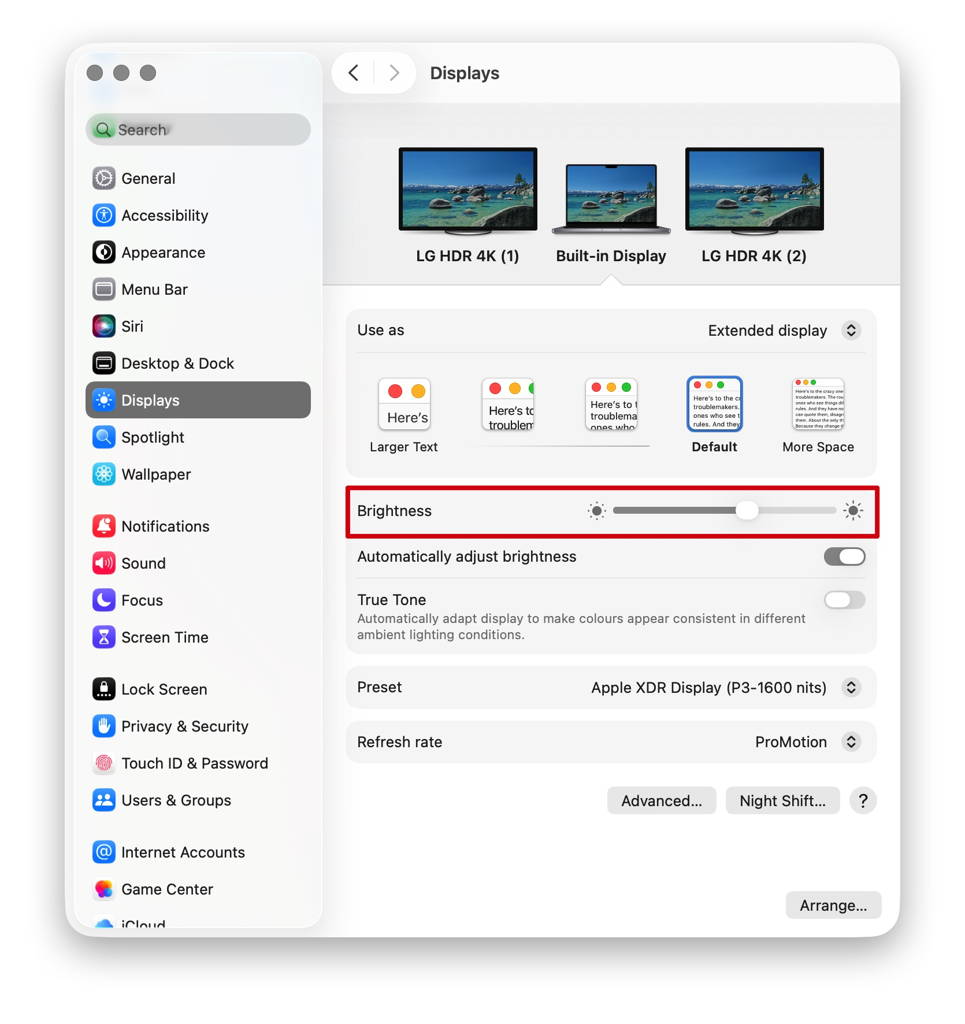
Step 3: If you are using a third-party monitor, please use the monitor’s built-in menu to adjust brightness. If the screen is still black, the monitor may not be powered on or may be malfunctioning.

5. Software update
Software may affect display detection, image quality, and available resolutions or refresh rates.
Install the latest macOS updates. These updates can include firmware improvements for Apple displays.
If your monitor is not made by Apple, make sure it has the latest firmware provided by the manufacturer. Check the monitor’s manual or the manufacturer’s website for details.
If the issue persists, please contact the iVANKY support team and provide the following information so we can check for possible device compatibility issues:
1.Your macOS version
2.Which device is not working and its model
3. A purchase link if available
2. Unable to connect 2 monitors
1. Check Mac compatibility
Fusiondock Max 2 dual display output is supported only on the following models:
MacBook Pro M1/M2/M3/M4 Pro + M4 Base
MacBook Pro M1/M2/M3/M4 Max
Mac mini M2 Pro / M4 / M4 Pro
Mac Studio (all models)
2. Check accessories and connections
Step 1: Make sure the video cable (HDMI or USB-C) is securely connected to the monitor.
Step 2: If you are using a conversion cable with the iVANKY Dock, please use an iVANKY cable and connect to port 9 or 12 to ensure proper operation. Note: Port 12 (HDMI) does not support HDMI-to-DP cables.
Step 3: Go to the Apple menu (upper-left corner) > System Settings (or System Preferences) > Displays, and select the resolution recommended by your Mac.
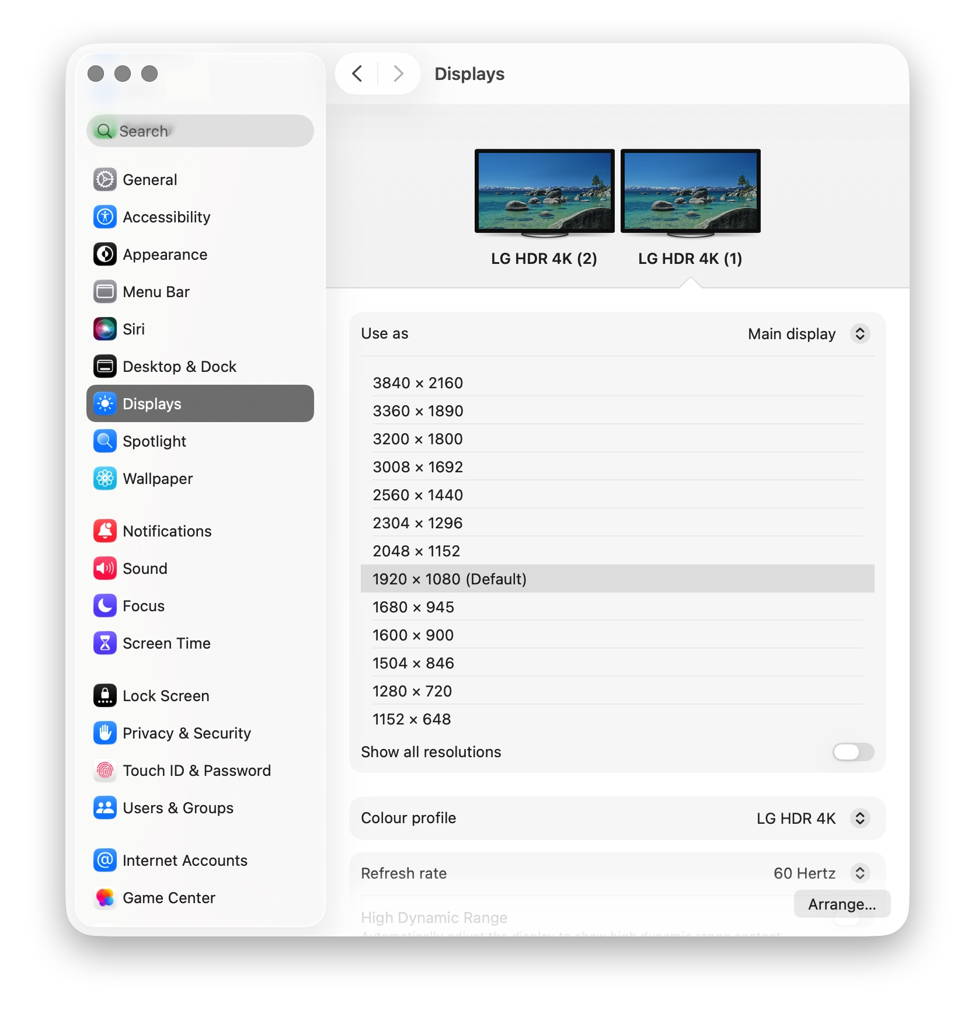
Step 3: Unplug the dock’s USB-C cable from your Mac, flip the connector, and reconnect it.
Step 5: Try another Thunderbolt port on your Mac.
Step 6: If the external display is detected but shows no image, replace the HDMI cable. If the issue persists, please contact iVANKY customer support.
3. Monitor detection
Step 1: Disconnect the monitor from the docking station, then reconnect it. Turning off the monitor first may help.
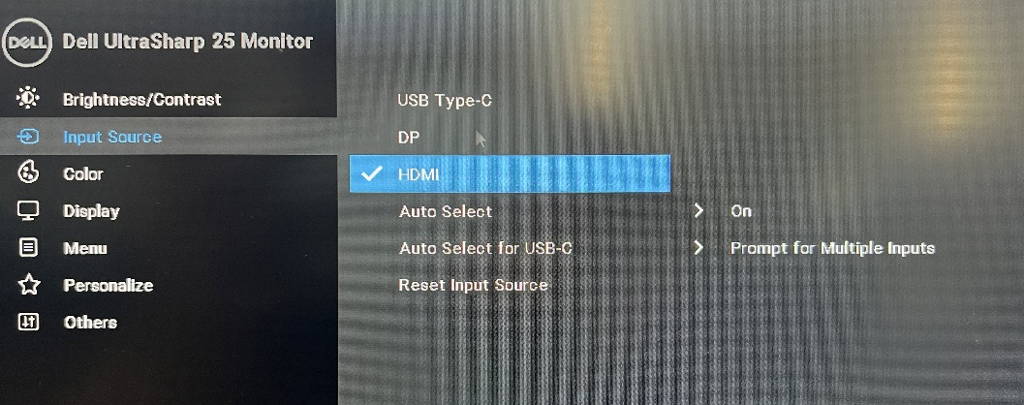
Step 2: Manually select the correct input source on the monitor (e.g., HDMI).
Step 3: Restart your Mac. For MacBook, close the lid for a few seconds, then reopen it.
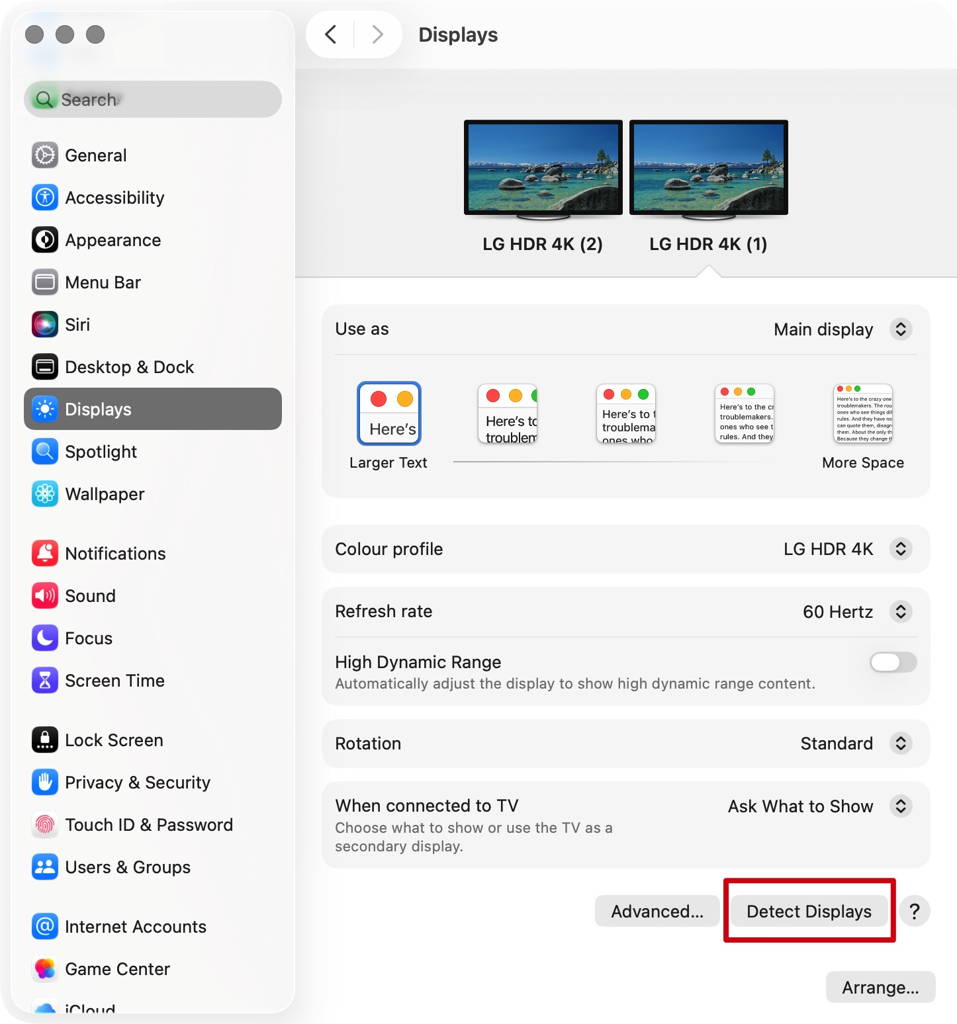
Step 4: Go to the Apple menu (upper-left corner) > System Settings (or System Preferences) > Displays. Hold the Option key to reveal the Detect Displays button, then click it repeatedly (10+ times).
4. Allow Docking Station Connections
Step 1: Go to the Apple menu (upper-left corner) > System Settings (or System Preferences) > Privacy & Security.
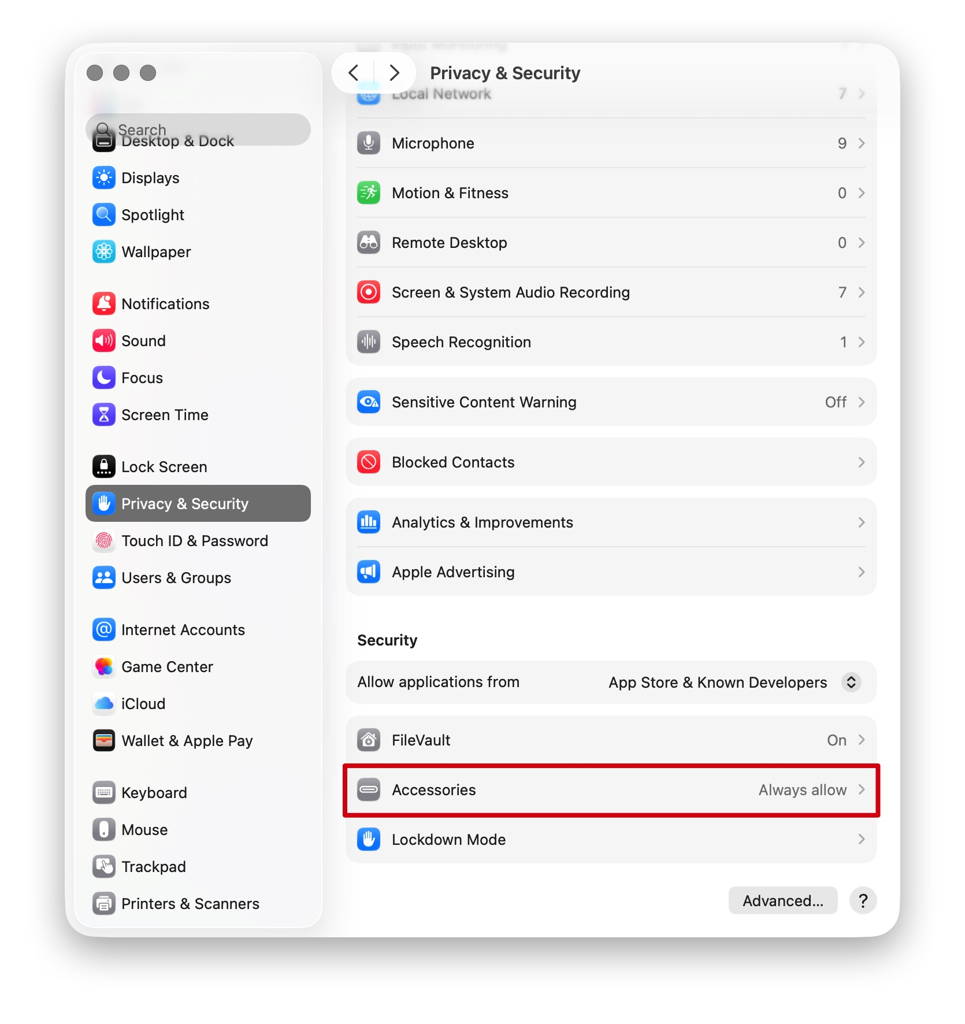
Step 2: Scroll down and click the pop-up menu next to “Allow accessories to connect”, then choose the option you need.
5. Check monitor brightness
Step 1: If the external monitor is black, please make sure the brightness is not set to the lowest.
Step 2: If you are using an Apple keyboard and monitor, adjust the brightness with the brightness keys on your keyboard, or go to System Settings > Displays to adjust it.
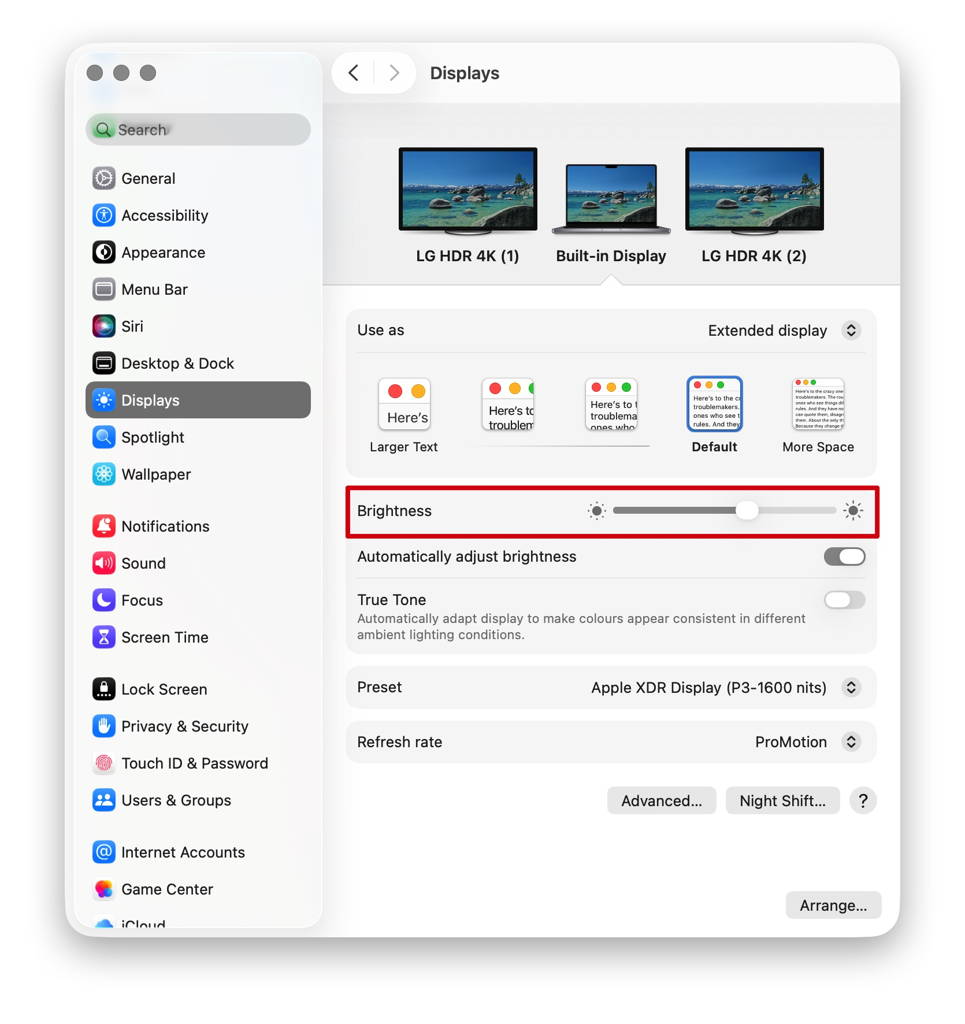
Step 3: If you are using a third-party monitor, please use the monitor’s built-in menu to adjust brightness. If the screen is still black, the monitor may not be powered on or may be malfunctioning.

6. Update Software
Software may affect display detection, image quality, and available resolutions or refresh rates.
Install the latest macOS updates. These updates can include firmware improvements for Apple displays.
If your monitor is not made by Apple, make sure it has the latest firmware provided by the manufacturer. Check the monitor’s manual or the manufacturer’s website for details.
If the issue persists, please contact the iVANKY support team and provide the following information so we can check for possible device compatibility issues:
1.Your macOS version
2.Which device is not working and its model
3. A purchase link if available
3. Issues on LG UltraFine 5K Monitor
Note: VCD20 only supports connecting a single LG UltraFine 5K (27MD5KL-B), but it can support one LG UltraFine 5K (27MD5KL-B) plus an additional HDMI monitor.
1. Check if your Mac supports dual displays
(1) Connect the LG UltraFine 5K (27MD5KL-B) monitor to any of the FusionDock Max 2 Thunderbolt ports (21/22/23) using a Thunderbolt cable.
(2) Connect the HDMI monitor to the FusionDock Max 2 HDMI port (port 14).
4. Multi-Display Resolution Not Meeting Specifications
Step 1: Unplug the dock from your Mac, then reconnect it using Thunderbolt. If it still doesn’t work, try flipping the dual USB-C connector before reconnecting.
Step 2: The FusionDock Max2 HDMI port (Port 14) supports up to 4K@60Hz. If you’re using an ultra-wide or high-refresh monitor (e.g., 3440×1440 or 5120×1440), the display may not fill the screen or the refresh rate may appear abnormal. For such monitors, please connect them via a USB-C-to-DP or Thunderbolt cable to any of the FusionDock Max 2 Thunderbolt ports (21/22/23) for optimal performance.
Step 3: Connect the monitor directly to the dock to confirm if the resolution meets your requirements. If the resolution still isn’t right, switch to another cable and see if that helps.
Step 4: Connect the monitor directly to your Mac to confirm that the monitor itself outputs the correct resolution.
If the issue persists, please contact the iVANKY support team and provide the following information so we can check for possible device compatibility issues:
1.Your macOS version
2.Which device is not working and its model
3.The purchase link if available
5. Unable to Output Dual 6K Displays
Note: Only ports 21/22/23 on the FusionDock Max 2 support 6K resolution output.
Supported devices for dual 6K output via Thunderbolt:
-MacBook M1/M2/M3/M4 Pro/Max
-MacBook with M4 chip (base configuration)
-MacStudio (all models)
-Mac Mini M4/M4 Pro/M2 Pro
When using two Apple Pro Display XDR monitors, the system can achieve dual 6K output at 2 × 6016 × 3384 @ 60 Hz.
Limitations with third-party 6K monitors:
For example, the Dell UltraSharp 32 6K (U3224KB) with a resolution of 6144 × 3456.
A single MacBook Thunderbolt controller cannot drive two displays at this resolution simultaneously, so dual 6K output is not supported with third-party 6K monitors.
Step 1: Make sure the USB-C video cable is securely connected to the monitor.
Step 2: Do not use adapters. Connect the dock to the monitor directly with a USB-C cable.
Step 3: If 6K output still does not work, please contact the iVANKY support team and provide the following information so we can check for possible device compatibility issues:
1.Your macOS version
2.Which device is not working and its model
3. The purchase link if available
6. Unable to connect 3 monitors
1. Check if your Mac supports triple displays.
* Only MBP M1/M2/M3/M4 Max, Mac Studio (all models), and Mac mini M4/M4 Pro support triple display output with FusionDock Max 2.
* Before setting up triple displays, we recommend connecting two monitors to port 21-23 and the third monitor to port 14.
2. Check accessories and connections.
Step 1: Make sure the video cable (HDMI or USB-C) is securely connected to the monitor.
Step 2: If you are using a third-party adapter cable with iVANKY Dock, please switch to our cable to avoid compatibility issues. Connect to ports 21–23 to ensure stable performance.
Step 3: Go to the Apple menu (upper-left corner) > System Settings (or System Preferences) > Displays, then select the resolution recommended by your Mac.
Step 4: Unplug the dock’s USB-C cable from your Mac, flip the connector, and reconnect it.
Step 5: Try another Thunderbolt port on your Mac.
Step 6: If the external display is detected but shows no image, replace the HDMI cable. If the issue persists, please contact iVANKY customer support.
3. Monitor detection
Step 1: Disconnect the monitor from the docking station, then reconnect it. Turning off the monitor first may help.
Step 2: Manually select the correct input source on the monitor (e.g., HDMI).
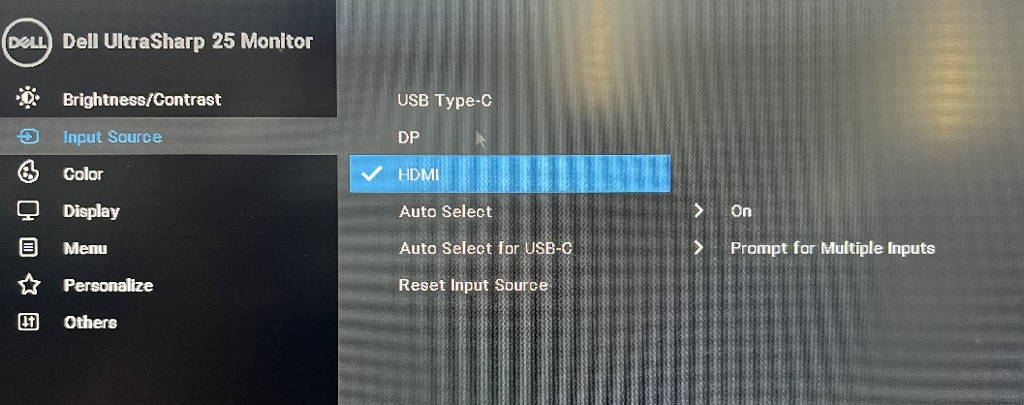
Step 3: Restart your Mac. For MacBook, close the lid for a few seconds, then reopen it.
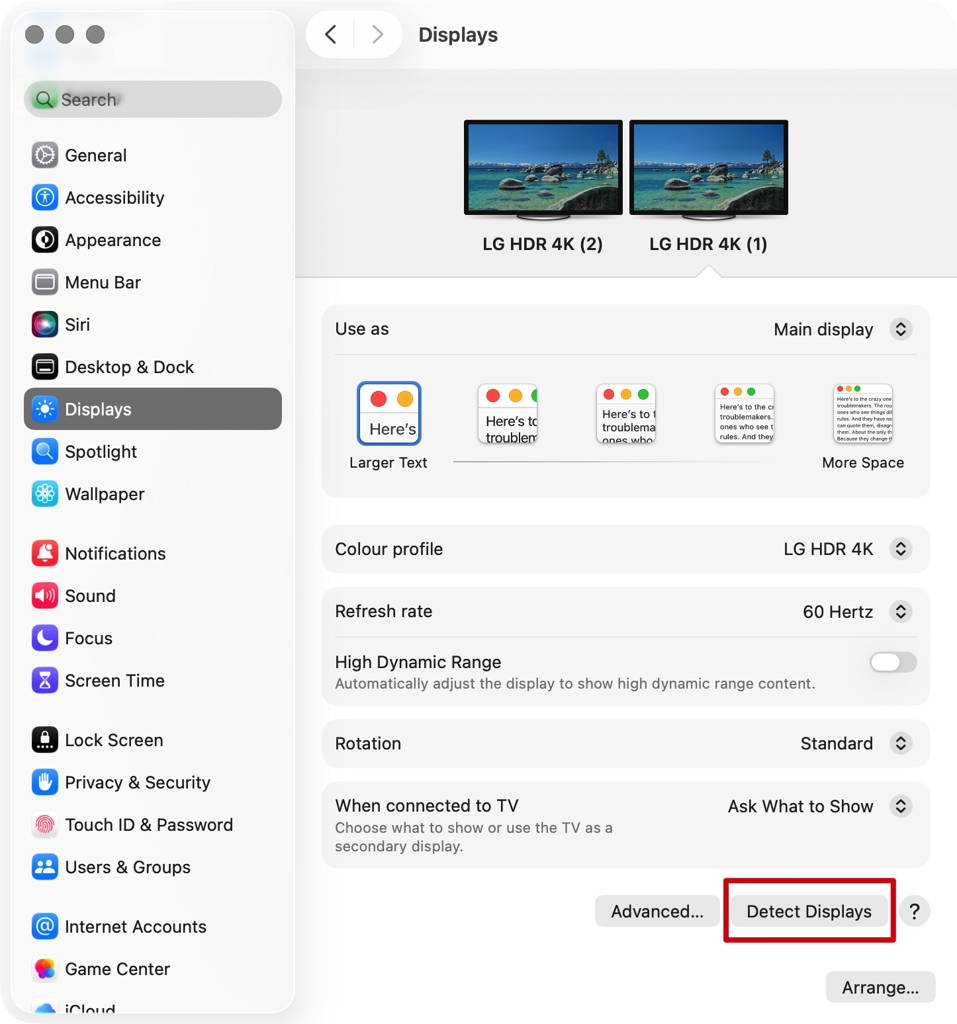
Step 4: Go to the Apple menu (upper-left corner) > System Settings (or System Preferences) > Displays. Hold the Option key to reveal the Detect Displays button, then click it repeatedly (10+ times).
4. Allow Docking Station Connections
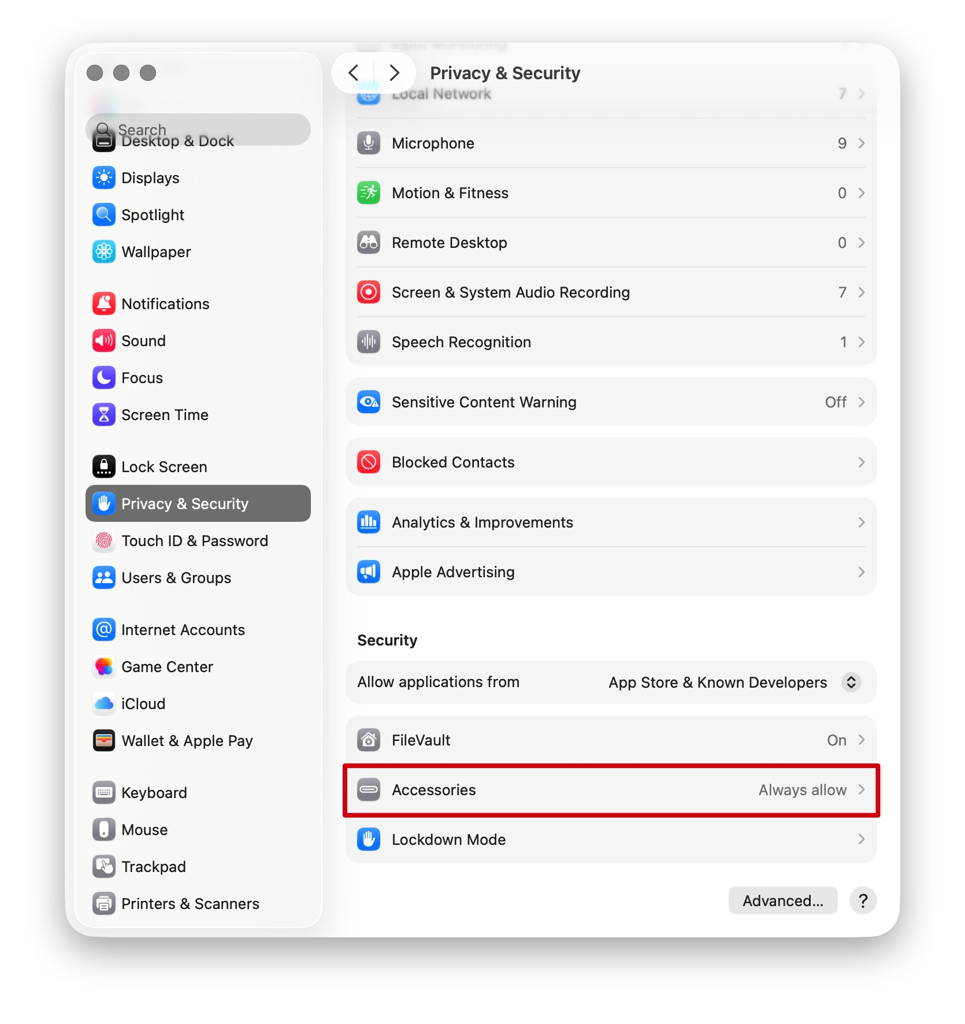
Step 1: Go to the Apple menu (upper-left corner) > System Settings (or System Preferences) > Privacy & Security.
Step 2: Scroll down and click the pop-up menu next to “Allow accessories to connect”, then choose the option you need.
5. Check monitor brightness
Step 1: If the external monitor is black, please make sure the brightness is not set to the lowest.
Step 2: If you are using an Apple keyboard and monitor, adjust the brightness with the brightness keys on your keyboard, or go to System Settings > Displays to adjust it.
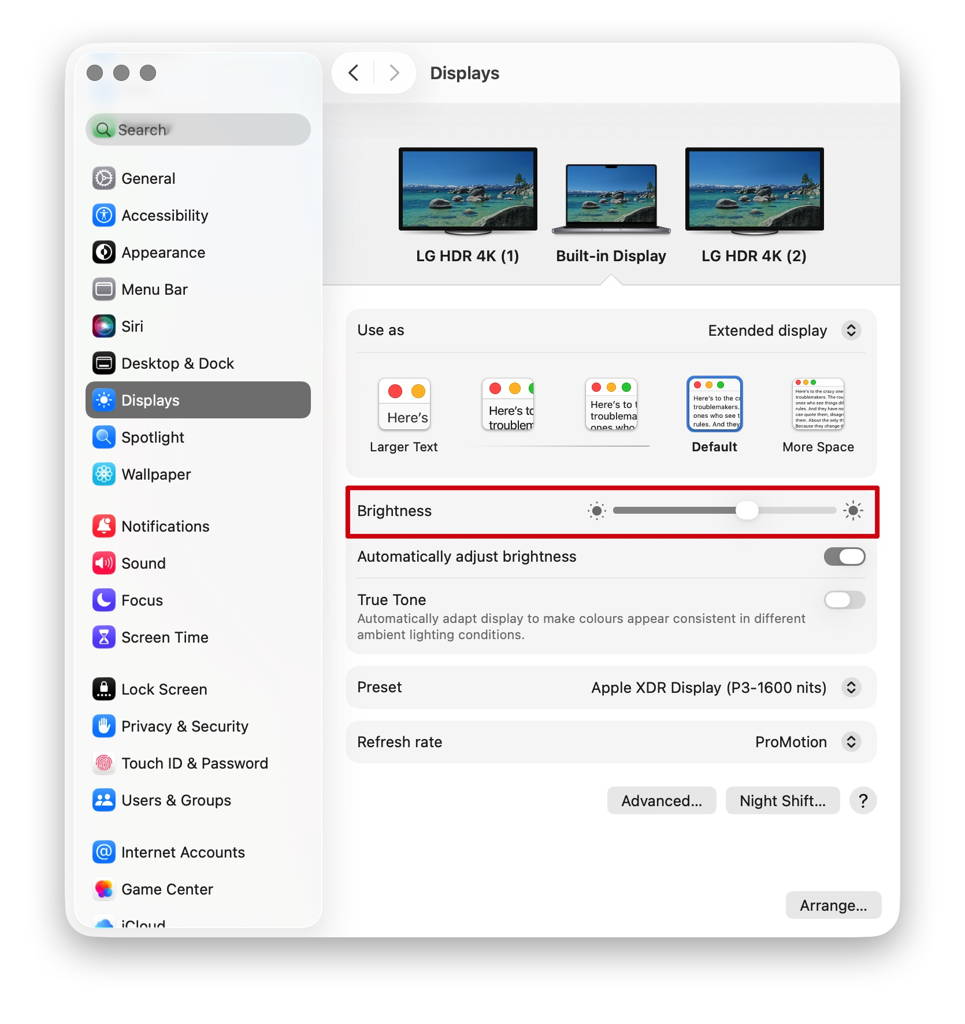
Step 3: If you are using a third-party monitor, please use the monitor’s built-in menu to adjust brightness. If the screen is still black, the monitor may not be powered on or may be malfunctioning.
6. Update Software
Software may affect display detection, image quality, and available resolutions or refresh rates.
Install the latest macOS updates. These updates can include firmware improvements for Apple displays.
If your monitor is not made by Apple, make sure it has the latest firmware provided by the manufacturer. Check the monitor’s manual or the manufacturer’s website for details.
If the issue persists, please contact the iVANKY support team and provide the following information so we can check for possible device compatibility issues:
1.Your macOS version
2.Which device is not working and its model
3. A purchase link if available
7. Screen Flickering
1. Check Accessories and Connections.
Step 1: Unplug the DC cable, wait 30 seconds, then reconnect it.
Step 2: Make sure the USB-C ports on the dock are clean and free of debris. If necessary, use compressed air to clean them.
Step 3: Ensure the video cable (HDMI or USB-C) is securely connected to the monitor.
Step 4: Reconnect all cables between your Mac and the monitor. For MacBooks, try flipping the dual USB-C connector on one side if needed.
Step 5: If you are using an adapter cable with the iVANKY Dock, please switch to an iVANKY cable and connect to ports 9 or 12 to avoid compatibility issues.
Step 6: If the problem persists, try replacing the dual USB-C cable. We recommend using a Thunderbolt 5 cable no longer than 1m (3.3 ft) connected to ports 11 and 17 on the dock.
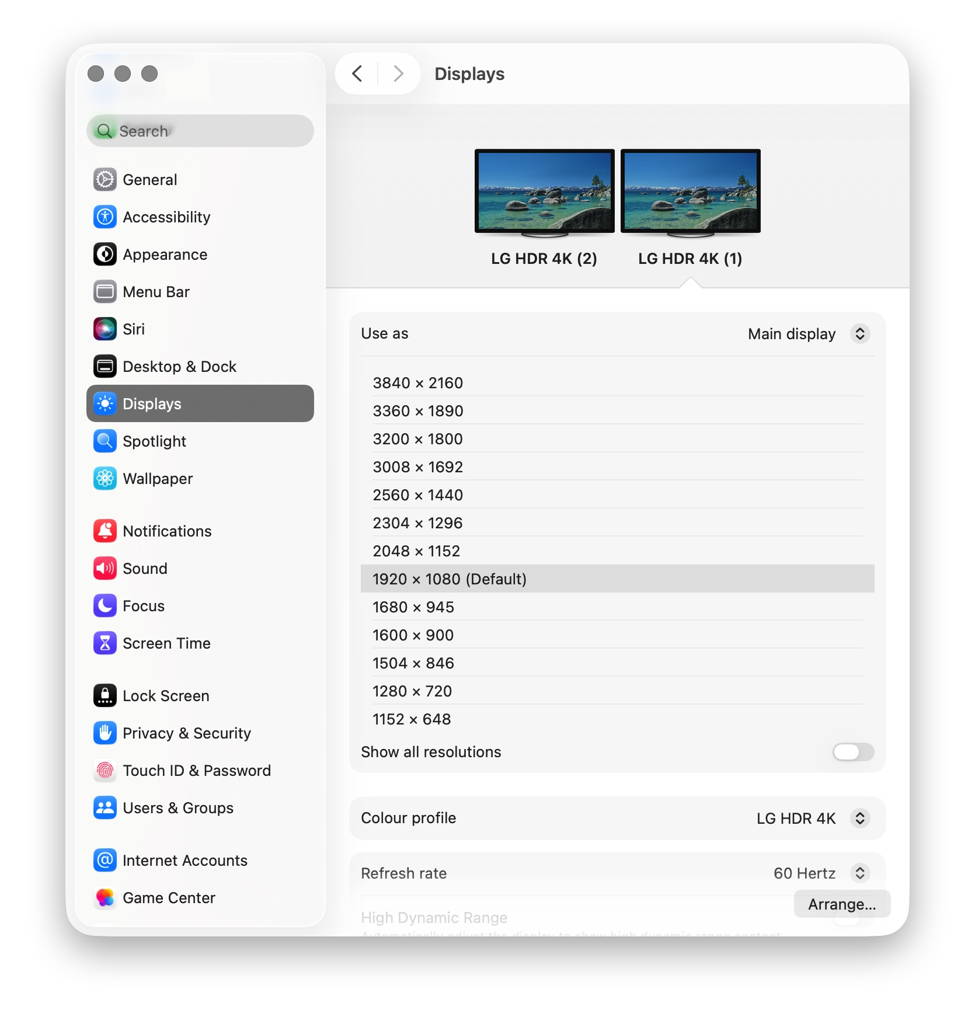
Step 7: Go to the Apple menu (upper-left corner) > System Settings (or System Preferences) > Displays, and select the resolution recommended by your Mac.
Step 8: Try using a different video input on your monitor.
Step 9: Make sure your Mac is updated to the latest macOS version.
2. Check the Monitor Condition.
Step 1: Inspect the screen for physical damage:
-Check whether the artifacts are caused by cracks.
-Look for visible cracks, dirt, or liquid leakage.
-If damage is found, please contact the monitor’s support team. .
Step 2: Rule out app-related issues:
-Restart your MacBook without opening any software. Test if the problem persists.
-If the issue only occurs with a specific application: Uninstall and reinstall the app, or update the app to the latest version.
-If the issue continues, please reach out to the app’s customer support.
Step 3: Keep your system and monitor updated
-Install the latest macOS updates, which may include firmware updates for Apple-made monitors.
If you’re using a non-Apple monitor, make sure it’s running the latest firmware provided by the manufacturer.
For details, please refer to the monitor’s documentation or the manufacturer’s website.
If the issue remains unresolved, please provide our customer support team with the following details:
-The macOS version currently installed on your MacBook.
-The exact port(s) that are not working.
-The model of your external monitor.
-The exact model, year, and specifications of your MacBook.
8. KVM Malfunction
1. Verify whether the FusionDock Max 2 works properly when directly connected to your MacBook.
Step 1: Please use the dual USB-C cable included with your FusionDock Max 2 to connect the dock to the correct USB-C ports on your MacBook.
Step 2: If you are currently using an HDMI-to-DP cable to connect the dock and your monitor, we recommend replacing it with one of the following: an HDMI cable, a USB-C cable, a USB-C to HDMI cable, or a USB-C to DP cable.
Step 3: If the issue persists, please contact the iVANKY support team for further assistance.
2. Verify whether the FusionDock Max 2 is connected correctly with your KVM
Step 1: Refer to Figure 1 for the correct connection method between the dock and KVM. If you are currently using an HDMI-to-DP cable, please replace it with a USB-C to HDMI cable or a USB-C to DP cable, connecting from the dock’s USB-C video port to the KVM’s video port.
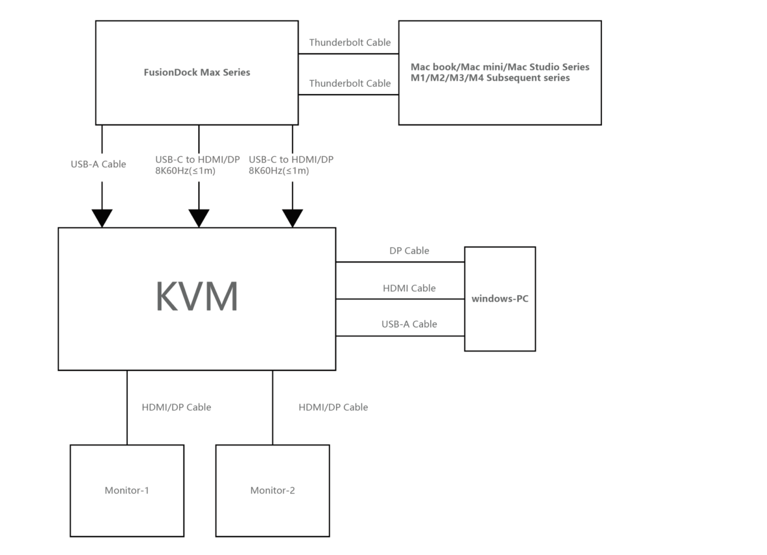
Step 2: If your connection setup differs from Figure 1, please contact the iVANKY support team and provide:
-Your MacBook model and macOS version
-Monitor model
-KVM purchase link & Suggested connection method (as shown in Figure 1)
If you encounter any issues while using the docking station please contact iVANKY technical support.
Email: support@ivanky.com
When contacting iVANKY technical support for technical issues, please provide the following information:
a. Your docking station serial number.
b. Your current macOS version.
c. Model of your MacBook.
d. Description of the issue and the devices connected to the dock.